

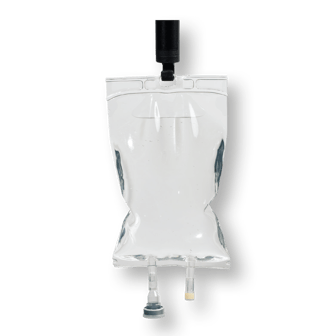
 Flexible IV bags keep sterile products protected from the moment they are filled until they are used. Any compromise, no matter how small, can affect sterility and undermine patient safety.
Our team sat down with Gianmarco Pincelli, Technical Sales Manager at Bonfiglioli Engineering to learn more about compliance, inline leak testing, and IV bag integrity.
The Importance of IV Bag Integrity in Sterile Manufacturing
Sterile drug manufacturing requires flexible IV bag integrity, as even a microscopic leak can lead to loss of sterility and create significant patient risk. Flexible IV bags must protect the contents from environmental exposure during:
- Filling
- Transport
- Final Administration
Ensuring the integrity of intravenous (IV) bags as stated in EU Pharmacopeia Annex I is a critical responsibility for pharmaceutical manufacturers.
Leakages, even microscopic, can compromise sterility, leading to patient safety risks and costly regulatory consequences. The United States Pharmacopeia’s guidance in USP <1207> Container Closure Integrity Testing (CCIT) sets the standard for verifying packaging integrity in sterile drug products.
Compliance with USP <1207> requires adopting validated, deterministic leak detection methods that offer high sensitivity and reproducibility. Among the available technologies, vacuum decay testing is recognized for its non-destructive nature and ability to detect microleaks reliably.
Key Considerations for USP <1207> Compliance
Integrity expectations give manufacturers a framework for demonstrating that their testing methods are scientifically supported and carried out with care. Here are the key considerations.
1. Choosing the Right Leak Detection Method
USP <1207> distinguishes between deterministic methods, which provide quantitative, reproducible results, and probabilistic methods. Vacuum decay is a deterministic method that measures pressure changes in a sealed chamber to identify leaks. This method offers superior sensitivity for flexible IV bags, which often have complex, multi-port configurations.
2. Validating Detection Limits
Establishing the Limit of Detection (LOD) is essential. Manufacturers must demonstrate that the system consistently detects leaks at or below a specified size (e.g., 100 microns), with rejected samples challenged according to ASTM F 2338 Test Sensitivity Verification and negative controls passing. This validation process should be documented for auditing purposes.
“The real challenge isn’t detecting a leak once; it’s detecting the same leak every time. Validating detection limits ensures repeatability, which is what auditors, regulators, and quality teams ultimately rely on.”
3. Equipment Qualification and Repeatability
The leak detection system itself must undergo IQ/OQ/PQ qualification to confirm it operates within validated parameters consistently. Regular calibration using known leak standards ensures ongoing reliability.
4. Operational Stability
Flexible IV bags experience a wide range of conditions during production, and factors such as temperature shifts, moisture, and movement of the solution inside the bag can affect how readings behave. A dependable test system accounts for these variables and continues to deliver consistent results while keeping the line running at full pace. This level of stability is significant for operations that handle high volumes or frequent changes in bag size and design.
“IV bag integrity must consider how the container behaves under real production conditions. Small variations in film, ports, or handling can influence long-term performance.”
5. Data Integrity and Compliance
Leak test results generated under USP <1207> must also comply with GMP data integrity standards. Recording in accordance with 21 CFR Part 11 requirements ensures secure, auditable electronic records and electronic signatures. Integration with MES and automation platforms supports traceability and audit readiness, strengthening quality assurance while simplifying compliance.
Together, these steps create a compliant, repeatable, and audit‑ready approach to IV bag integrity testing.
“The real value appears when teams view these requirements as connected steps rather than isolated tasks. This alignment provides deeper integrity that’s stronger and far easier to defend during an inspection.” - Gianmarco Pincelli, Technical Sales Manager, Bonfiglioli Engineering
How the IVB FLEX System Supports USP 1207 Compliance
Manufacturers often look for technology that meets USP 1207 expectations while also supporting the daily pressures of sterile production. The IVB FLEX system was developed with those practical needs in mind, combining testing, product handling, and digital documentation. The features that follow show how the system strengthens integrity programs and helps production lines maintain steady performance:
- Deterministic vacuum decay designed for IV bags provides high sensitivity while preserving the product for downstream use. The method captures quantitative pressure changes with precision, allowing teams to perform a full inspection without damaging the container and at a speed of up to 1.25 bags per second.
- Floating magnetic transport for gentle handling suspends each bag on a floating mover. This frictionless design protects delicate materials from unnecessary pressure or mechanical contact; smooth movement improves repeatability and reduces the potential for contamination or deformation during testing.
- Format flexibility and high throughput performance support multiple bag sizes, single and multi-port formats, and volumes up to one liter. Changeovers occur quickly to keep production flowing. The combination of sensitivity and speed helps facilities meet strict quality expectations without sacrificing output.
- Built-in validation and calibration tools simplify IQ, OQ, and PQ activities. The system gives quality teams a clear path for demonstrating long-term system stability. This preparation strengthens readiness for audits and regulatory inspections.
The IVB FLEX system also aligns with USP 1207, EU Annex 1, FDA cGMP, and 21 CFR Part 11. These elements create a unified compliance approach that supports process reliability and regulatory expectations.
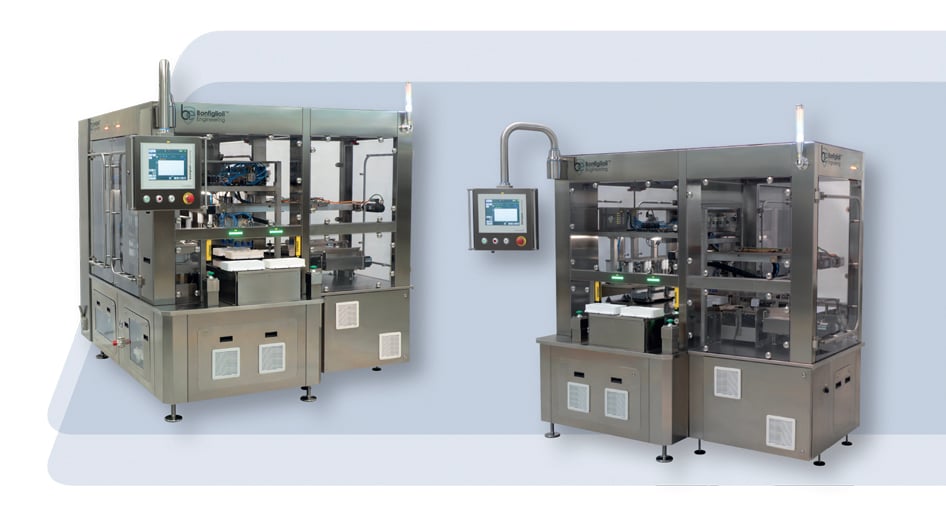
Strengthening Quality Assurance Through Deterministic Testing
Container closure integrity testing is a blend of scientific rigor and operational practicality. When a system supports both elements, manufacturers gain insight into their processes and reduce uncertainty across the production line.
The IVB FLEX system delivers this balance by providing:
- Sensitive non-destructive testing
- Support for repeatable validation
- Integration with digital quality systems.
These capabilities give manufacturers a dependable path for protecting IV bag integrity and upholding the highest standards of patient safety.
Explore the capabilities of the IVB Flex System and see how deterministic vacuum decay testing can strengthen IV bag integrity programs and support complete alignment with USP 1207.
Bonfiglioli Engineering experts are available to assist you in learning more about the IV bag integrity testing and discuss your specific inspection needs. Contact Us today to get started.
We are not just a machine manufacturer. We are your trusted partner for packaging integrity testing and analysis through feasibility studies, technical expertise, validation packages, product handling and custom-built solutions.
